

You’ve done your eyeshadow. Blended it out, felt good about it, checked the mirror, and it looked great... while your eyes were closed. Then you opened them, and half the look disappeared under a fold of skin.
If this sounds familiar, you’re not doing anything wrong. You just have hooded eyes, and hooded eyes need a slightly different approach to makeup than what most tutorials show you.
By the way, hooded eyes aren’t a “flaw” that needs fixing. They can look absolutely stunning once you know where to place colour and where to skip it.
And once you understand how to do eye makeup for hooded eyes, this eye shape can actually be quite easy to work with. You’re not trying to create perfect symmetry across a large, visible eyelid. You’re simply placing colour a little more strategically.
So, let’s get into it.
What Exactly Are Hooded Eyes?
Hooded eyes are when the crease of your eyelid is partially or completely covered by a layer of skin. So, when your eyes are open, very little or almost no lid space is visible.
For some people, it’s something they’re naturally born with. For others, it can develop gradually with age as the skin above the eyes becomes softer and looser.
In both cases, that neat little “lid space” you often see in eyeshadow tutorials is mostly hidden on hooded eyes. And that’s exactly why regular eyeshadow techniques don’t always work the same way on hooded eyes.
Eye Makeup Tips for Hooded Eyes That Make a Real Difference
If you only remember five things from this post, make it these. These eye makeup tips for hooded eyes are less about buying new products and more about changing where and how you apply what you already own.
1. Prime your lid, always.
Hooded eyes tend to have more lid movement and oil transfer because the lid folds over itself when you blink. This means eyeshadow can crease and fade faster compared to other eye shapes.
A good eye primer isn’t optional for you. It’s the one step that can decide whether your eyeshadow still looks fresh after 11 AM.
2. Raise your crease shade slightly above your actual crease.
This is the step that confuses people the most. Your natural crease is hidden, so if you apply your transition shade exactly where your crease is, no one will see it once your eyes are open.
Instead, apply it slightly higher, in the area that stays visible when your eyes are open. This is the biggest difference between a hooded-eye look that actually shows up and one that simply disappears.
3. Keep the lid shade matte or satin, not glittery.
Heavy shimmer or glitter can crease and fold unevenly on hooded lids because there’s less flat surface for it to sit on.
A soft matte or satin shade blends more easily, looks smoother, and keeps your eye makeup looking cleaner throughout the day.
4. Tightline instead of drawing a thick liner on top.
A thick line along the upper lash line can get hidden under the hood as soon as you open your eyes.
Tightlining means applying liner along your upper waterline, right into the roots of your lashes. It makes your lashes look fuller and your eyes more defined without the liner getting hidden under the hood.
5. Don't skip the lashes and brows.
Once the lid space is limited, your lashes and brows do a lot of the heavy lifting. Curled lashes with a coat or two of a lengthening mascara open up the eye instantly. If you wear falsies, go for a pair of eyelashes with a slight lift at the outer corners rather than a flat, straight band. And a well-shaped eyebrow with a soft arch gives the eye area structure that hooded lids naturally lack.
Makeup Techniques for Hooded Eyes That Actually Open Up the Eye
Beyond the basic tips, there are a few techniques that makeup artists use again and again when working with hooded eyes. These are small, deliberate steps that don’t take much extra time but can make a noticeable difference in how the whole eye makeup look comes together.
The floating crease. Instead of blending your transition shade directly into your natural crease, place it slightly above the hood, in the area that stays visible when your eyes are open. Soften the edges so it doesn’t look like a harsh line, but keep the shade higher than you normally would.
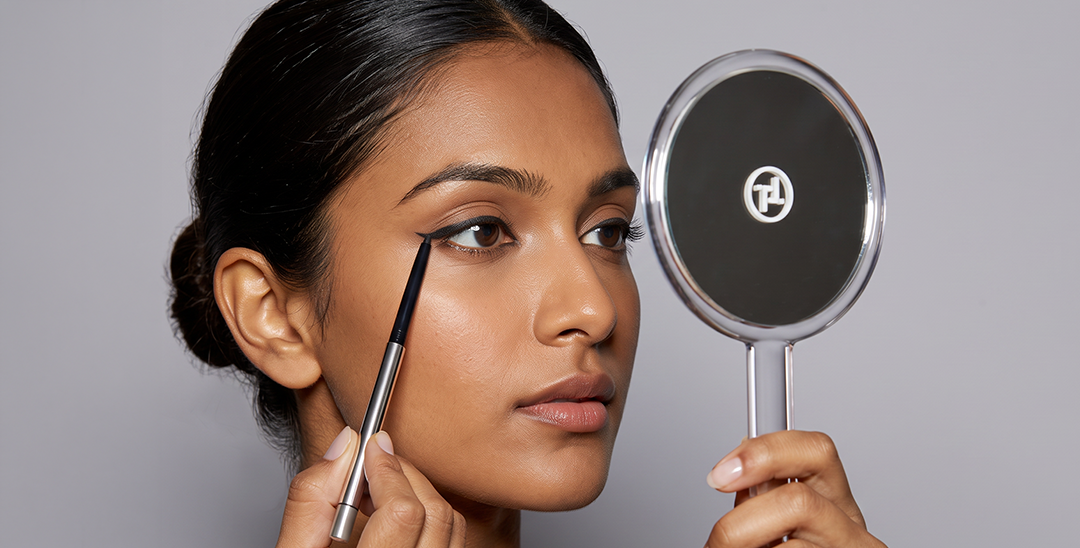
Winging up, not out. A liner wing drawn straight and horizontally can get pulled down by the hood, sometimes making the wing point downward when your eyes are fully open. Angle it upward instead, following the natural line of your lower lash line as you extend it outward. This helps lift the eyes rather than pulling them down.
A little highlight at the inner corner and brow bone. Add a touch of a light, shimmery shade to these two areas. It helps make the eyes look more open and instantly brightens up tired-looking eyes.
Blend upward, not sideways. When softening your eyeshadow edges, move your brush up and out instead of going back and forth. Blending side to side can push the colour into the crease fold, while blending upward keeps it where it can actually be seen.
Makeup Styles for Hooded Eyes You Can Actually Wear
Once these techniques start to feel natural, it’s worth having a few go-to styles depending on where you’re headed.
-
Soft smokey eye: Start with a warm brown or bronze base, then add a deeper shade along the upper lash line and slightly wing it out. Keep the edges smudged rather than sharply lined. It’s great for evenings, weddings, or any occasion that calls for a little more effort.
-
No-crease draped shadow: Blend one or two shades into a soft gradient without creating a defined crease line. It’s quick, low-effort, and works well for daytime.
-
Tightlined cat eye: Tightline the upper waterline and add just a small upward flick at the outer corner instead of creating a full wing. It looks clean and works well with the hooded eye shape.
-
Colour on the liner instead of the lid: Skip eyeshadow altogether on some days and use a bold coloured liner along the upper lash line and lower waterline. It takes less effort but still makes a statement.
The shopping list barely changes between these looks: a good primer, a couple of blendable eyeshadow shades you actually enjoy using, a fine-tipped eyeliner, and a mascara that holds your curl throughout the day.
You really don’t need a ten-pan palette sitting unused in your drawer for this.
Final Thought
At the end of the day, eye makeup for hooded eyes isn’t difficult once you understand where the colour needs to go. It’s not about using more product, but about placing it in a smarter way.
Explore our full range of eye makeup essentials to try these techniques, and check out our beauty blog for more looks and useful tips.
Frequently Asked Questions
1. Does eyeliner work for hooded eyes?
A: Yes, but placement matters more than the style of liner. A tightlined upper waterline paired with a slight upward wing works better on hooded eyes than a thick, straight line along the lash line, which tends to get hidden under the hood.
2. What eyeshadow shades suit hooded eyes best?
A: Matte and satin shades in warm browns, terracottas, or soft plums tend to work better than heavy shimmer, since they blend more evenly on the limited lid space and don't crease as noticeably.
3. Should I apply eyeshadow above my crease if I have hooded eyes?
A: Yes. Since your natural crease is partly covered, placing your transition or crease shade slightly above it — in the area visible with eyes open — makes the eyeshadow actually show up instead of disappearing under the hood.
4. Do false lashes suit hooded eyes?
A: They can work well, especially styles with a slight lift toward the outer corners, since they draw the eye upward and outward and balance the lid.
5. Is a primer necessary for hooded eyes?
A: It helps a lot. Hooded lids fold and touch more through the day, which speeds up creasing and fading, so a primer under your eyeshadow makes the look last significantly longer.
Share:
How to Avoid Cakey Makeup? Causes and Fixes